Speaking
Dr. Campbell offers presentations to Civil War Roundtables, book clubs, libraries and other groups interested in Civil War history or Civil War medicine.
American Neurology: Born on the Battlefield
Civil War physicians were at the forefront of the development of specialty medicine as it began to emerge in the mid-19th century. In essence, European neurology was spawned in its teaching hospitals; American neurology was born on the battlefield.
While S. Weir Mitchell watched nerve injured soldiers relieve their agony by soaking their limbs in ice water and wondered why, William A. Hammond, Surgeon General of the Union Army declared neurology would be a specialty in America, then helped create the systems and infrastructure that made specialty medicine possible.
This talk explores the seminal contributions of these two pioneers who helped American neurology emerge out of the carnage of the Civil War.
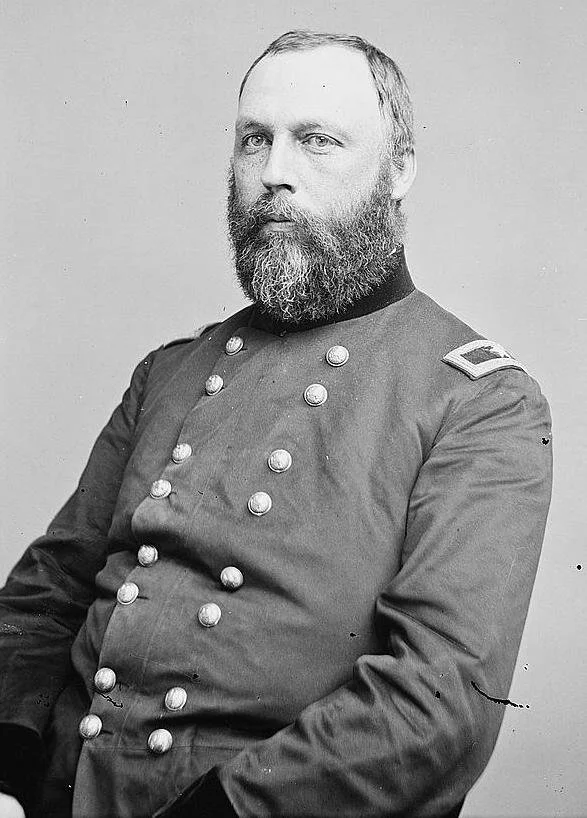
Brigadier General William A. Hammond, Surgeon-General of the Union Army, from Civil War photographs, 1861-1865 (Library of Congress), via Wikimedia Commons, public domain.
PTSD and Soldiers Heart
Soldiers through the eons of human history have carried emotional wounds from combat. During and after Vietnam, re-physicians re-described the psychological wounds of war and gave them a new name: post-traumatic stress disorder. The historical record leaves little doubt many Civil War soldiers suffered from PTSD, with depression, anxiety, flashbacks, suicide and alcoholism strikingly like those who fought in Vietnam.
Many authors claim that soldier’s heart (irritable heart, Da Costa’s syndrome) was the Civil War equivalent of PTSD, but this is too simplistic a formulation.
There is no question many Civil War soldiers suffered from PTSD. There is no question that irritable heart was a real clinical syndrome. But equating the two is simply not accurate. This myth-busting talk details how there is more to the story.
Audacious Acts of the Civil War
During the Seven Days Battles in 1862, Robert E. Lee’s troops nicknamed him “Audacity” Lee as his aggressive tactics drove a superior enemy force from the gates of Richmond.
But Lee was not the only one capable of audacious behavior.
Mary Bowser, a free, educated Black woman with a phenomenal memory, went undercover as a slave in the Confederate White House, becoming one of the Union’s most effective spies. Union raiders stole a locomotive and led pursuers on a wild chase through North Georgia. The audacious charge of the out-of-ammo, bayonet-wielding 20th Maine Infantry Regiment down the hill at Little Round Top saved the day at Gettysburg. Rebel rangers kidnapped a Union general right out of his headquarters. Clara Barton removed a bullet from a soldier’s face at Antietam (using a pocketknife!). Eight Confederate sailors sat shoulder to shoulder in the pitch dark, hand cranking the propeller shaft of the CSS Hunley on a suicide mission to become the first submarine to sink an enemy ship. The Hunley was lost for the next 131 years until finally found—not by the Navy, but by a team led by the novelist Clive Cussler in 1995. She was raised in 2000 and the crew given a full military funeral in 2004.
This talk highlights these audacious acts of the Civil War.
The Women Warriors of the Civil War: The hidden history of those who fought
Women have been finding their way into combat, through the front door or the back, for centuries. Now, instead of toting muskets they fly fighter jets. Period estimates ran as high as four hundred women who fought in our Civil War--in the infantry, in the cavalry, in the artillery. Historians now estimate the actual number runs closer to a thousand.
DeAnne Blanton, who spent her career as an archivist specializing in 19th century U.S. Army records at the National Archives and Records Administration, and Lauren M. Cook, wrote They Fought Like Demons, whose pages document at least two hundred and fifty instances of brave women who took up arms to fight for or against their country.
Lauren Cook Burgess later published the collected letters of Sarah Rosetta Wakeman, one of the only firsthand accounts of a woman soldier in An Uncommon Soldier.
This talk will highlight a few of these amazing stories.
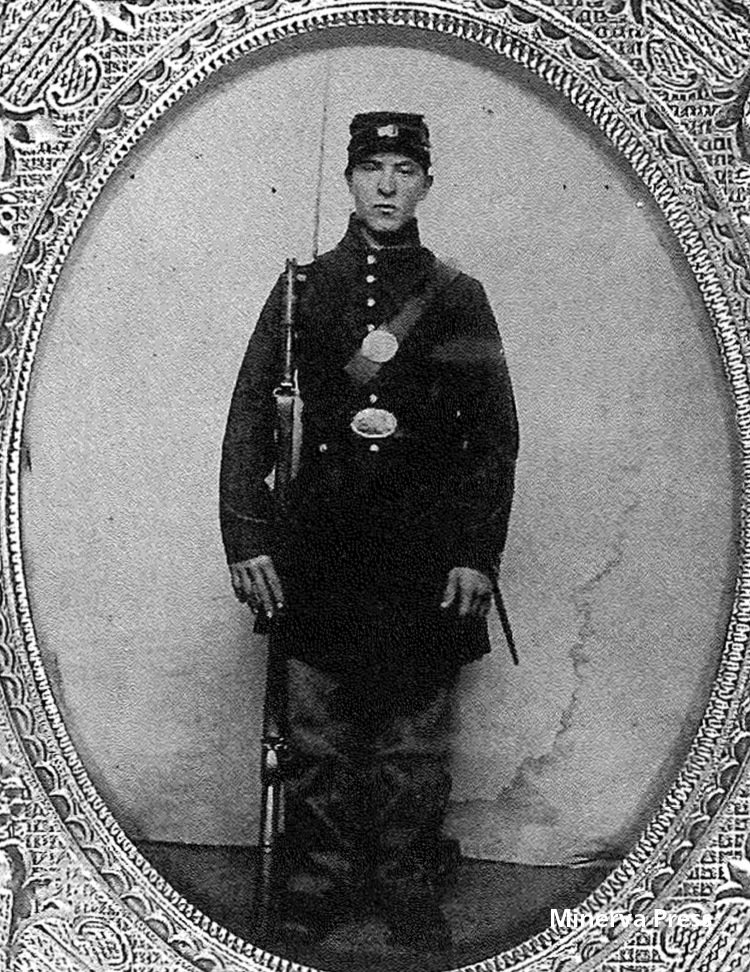
Sarah Rosetta, aka Lyons, Wakeman | Image credit: Sarah Rosetta Wakeman (Pvt. Lyons Wakeman) by TradingCardsNPS, via Wikimedia Commons